
 Sample — Not Yet For Sale
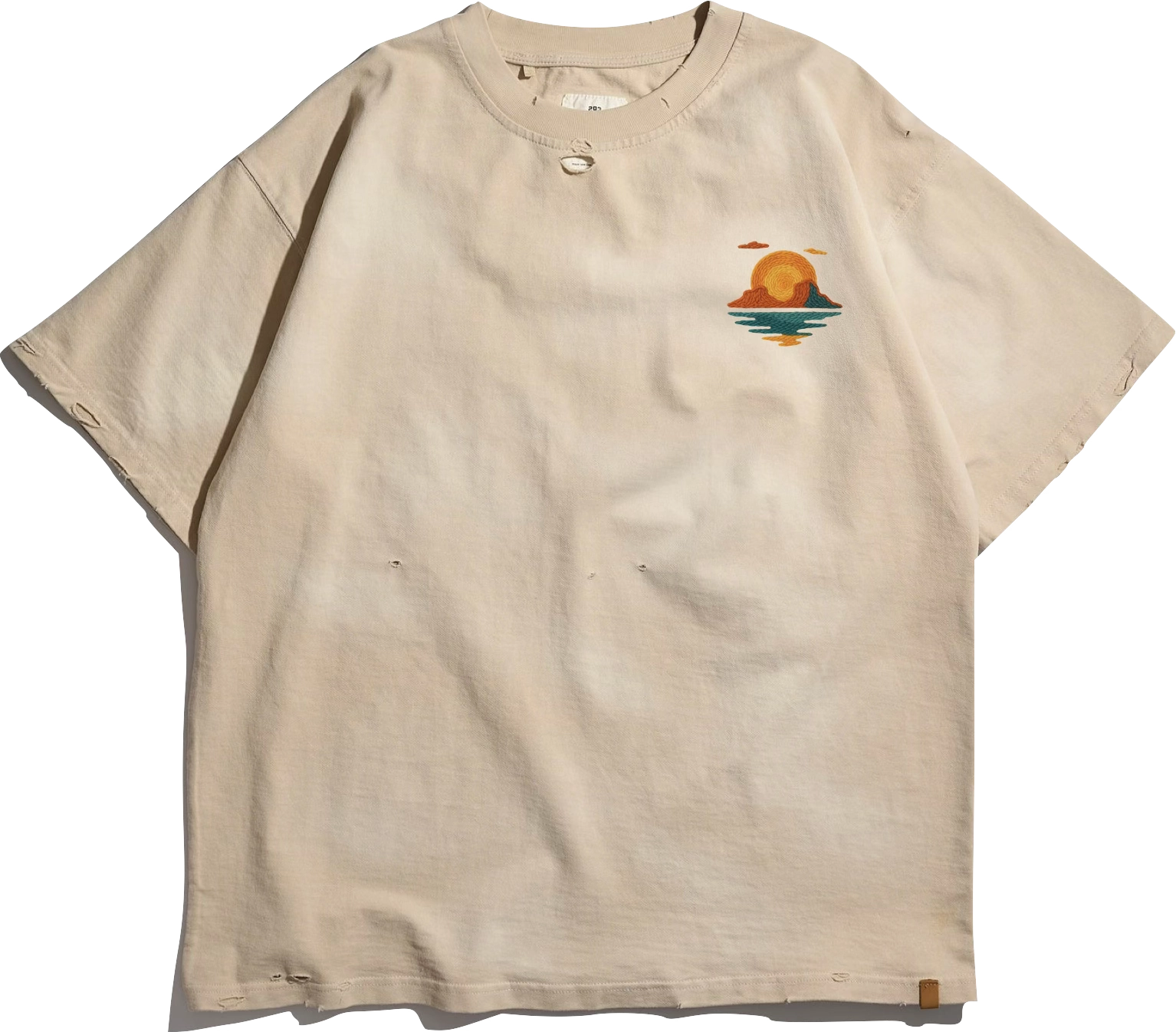
Zion Sandstone Sunrise Tee
Ivory · 130gsm · Chain-Stitch Embroidery · Vintage Single-Stitch
Ivory Sunfade tee carrying the tone of first light touching stone — an in-between color from the hour before Zion wakes.
- Chain-stitched sunrise over water on the chest
- Mesa orange, canyon red, deep river teal embroidery
- Vintage single-stitch sleeve and bottom hems
- Garment sun-faded for a broken-in feel from first wear
- Modern fit with 70s/80s vintage construction
This garment exists today as a production sample — real fabric, real construction, not yet for sale. We'll open the list when it's ready.
Get Notified
Zion Sandstone Sunrise Tee
There are places in the West where time slows enough for you to hear the world forming. Zion is one of them. At dawn, before the heat wakes, before the canyon walls come alive with color, the air hangs still and the river murmurs like an old story being retold. The sandstone faces glow pale at first — bone, cream, dust, chalk — before swelling into oranges and reds. For a few minutes, the canyon is the color of memory: soft at the edges, warm in the middle, and impossibly fragile.
This tee belongs to that moment.
The Ivory Sunfade wash carries the tone of first light touching stone — an in-between color, not bright enough to be morning, not washed enough to be desert tan. It’s the palette of canyon silence, of soft illumination on rock that has stood through empires, migrations, and shifting borders.
But Zion is only the beginning. The West is full of canyons that tell the same story in different dialects: the slot corridors of Utah, the winding gorges of Arizona, the shadowed clefts of Nevada, and the long river cuts that run deep into Sonora, Mexico. These places share a geology, a temperament, a silence so complete that footsteps sound like years passing. They were once part of a single northern frontier, a world without the borders that came later.
Before Zion was a national park — or even a name — its narrow passages served as corridors for the Southern Paiute, who moved with the seasons, following the Virgin River through stone as if through ancestral hallways. Spanish expeditions later relied on these same canyons, tracing routes up from Mexico City through Alta California and Nuevo México. When Mexico’s northern frontier included all of Utah and Arizona, Zion’s cliffs formed a natural monument long before it was drawn onto American maps. The land does not care what we call it — it remembers who walked it.
The chain-stitched sunrise on the chest nods to those early travelers. The embroidered sun rises over water, just as it would have for anyone crossing canyon rivers at daybreak — traders, families, explorers, shepherds, and the many unnamed who shaped the West before it became storybook. The motif is worked in mesa orange, canyon red, and deep river teal: the elemental colors of sandstone country.
The garment itself follows the lineage of vintage American tees — the kind you find in old trunks or thrift stores in desert towns, softened by decades of sun. Made from 100% combed cotton in a feather-light 130gsm, it’s built for heat, wind, and movement. Single-stitch hems recreate the construction of 70s and 80s premium blanks, when garments were made slowly, carefully, and with materials chosen for longevity rather than cost. The Sun-Fade wash ages the tee just enough to feel familiar from the first wear.
This is the kind of shirt that picks up your life over time. It softens on road trips. It bleaches at the shoulders when worn in high desert sun. It takes on the faint mineral scent of canyon dust, the memory of sweat from July afternoons, the quiet of mornings spent beside cold river water.
Wear it in Zion. Wear it in Sedona. Wear it while crossing the borderland deserts that stretch from Nevada to Chihuahua, where the earth glows the same at sunrise regardless of which nation claims it. Wear it until the ivory fades and the embroidery puckers slightly with age — because like the canyons themselves, this shirt is meant to weather time, not escape it.
This is not a souvenir. It is not a postcard. It is a piece of the desert you get to carry — a dawn that lives on fabric, a sandstone sunrise you don’t have to leave behind.